
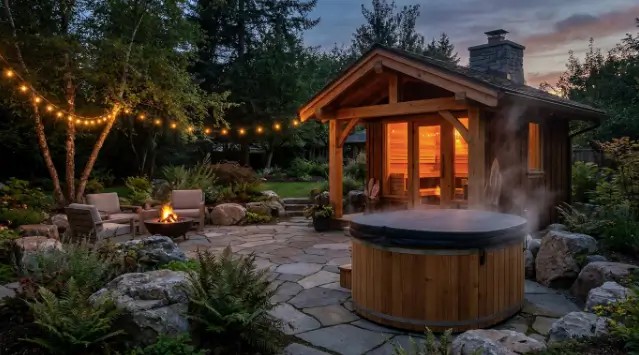
A sauna kit’s sticker price is only part of the real cost. A two-person kit lists for $3,000 to $5,000 and a four to six-person kit for $6,000 to $10,000, but a dedicated electrical circuit adds $600 to $1,800, an outdoor foundation adds $300 to $1,500, and freight delivery adds $150 to $500 depending on distance from the distribution point. A mid-size four-person outdoor kit typically lands between $7,000 and $12,500 fully installed, which is a wider range than most listings suggest up front.
What Does a Sauna Kit Cost Before Anything Else Is Added?
The base kit price covers pre-cut wall, ceiling, and floor panels, a bench pack, a door, and in most cases a matched heater with stones. Two-person kits start around $3,000 for budget hemlock construction and climb toward $5,000 for cedar with a glass door and upgraded insulation. Four to six-person kits run $6,000 to $10,000 on the same scale. Always confirm whether the listed price includes the heater, since some budget kits sell the shell separately and add $800 to $2,000 for the heater as a second line item that is easy to miss when comparing two prices.
What Does the Heater Add to the Total?
When the heater is not already bundled, budget for $800 to $2,000 depending on kilowatt output and brand, with higher-end electric heaters carrying digital controls and longer warranties toward the top of that range. Heater sizing should match the kit’s cubic footage rather than its footprint, and buying undersized to save a few hundred dollars typically backfires through higher electric bills and a shorter element lifespan from running continuously without reaching target temperature.
What Does Electrical Work Typically Cost?
Most kit heaters above 6 kilowatts require a dedicated 240-volt circuit, and a licensed electrician typically charges $600 to $1,800 for the run, depending on distance from the main panel and local labor rates. Homes without spare capacity in the panel face an additional cost for a subpanel or service upgrade, which can add $1,000 or more. Getting a firm electrical quote before ordering the kit, not after it arrives, is the single best way to avoid a budget surprise on this line item.
Does a Kit Need a Foundation or Pad?
Outdoor kits generally need a level base, whether a poured concrete slab, a paver bed, or a pressure-treated wood frame set on gravel. DIY paver or gravel pads run $300 to $700 in materials for a mid-size footprint, while a contracted concrete slab runs closer to $1,000 to $1,500. Indoor kits installed on an existing subfloor typically skip this cost entirely, which is one of the bigger reasons an indoor kit can come in noticeably cheaper installed than an outdoor one of the same size.
What About Delivery and Freight Charges?
Kits ship flat-packed on a pallet by freight carrier rather than standard parcel shipping, and charges typically run $150 to $500 depending on distance from the distribution center and whether the delivery address has dock access or needs liftgate service for a residential curb drop. Buyers comparing total cost across two retailers should confirm freight is either included in the listed price or added at checkout, since a lower sticker price with freight excluded is not always the cheaper option once shipping is added.
What Is a Realistic Total Installed Cost?
Adding it up for a common scenario, a four-person outdoor cedar kit at $7,500, a bundled 6-kilowatt heater within that price, a $1,200 electrical circuit, a $600 paver pad, and $300 freight, lands around $9,600 total. A smaller two-person indoor kit with no foundation cost and a shorter electrical run can land closer to $4,500 to $5,500 all in. Buyers who want to see current unit and heater pricing broken out by kit size before running their own installed-cost math can browse SweatDecks sauna kits alongside getting local electrical and pad quotes, which together give a realistic bottom-line number instead of the shell price alone.
Where Do Buyers Usually Overspend or Underspend?
Overspending most often happens on the shell itself, upgrading from hemlock to cedar or adding a glass door and extra windows without checking whether the heater still matches the new insulation and glass area, which can mean paying for a bigger heater on top of the wood upgrade. Underspending most often happens on electrical work, where buyers get a rough estimate from the kit’s marketing copy instead of an actual quote from a local electrician and then discover the real number is $400 to $800 higher once distance from the panel and any needed panel capacity are factored in. A useful rule is to get firm numbers on the two most variable line items, electrical and foundation work, before finalizing which kit size and wood species to order, since those two costs swing more than the kit price itself between two otherwise similar households.
Are Financing or Payment Plans Worth Considering?
Some kit retailers offer installment financing that spreads the unit cost over 6 to 24 months, which can make sense if it lets a buyer order the correct size and wood species instead of downsizing to fit a smaller upfront budget. The tradeoff is interest, which on a longer term can add several hundred dollars to the total cost of a mid-size kit, so it is worth comparing the financed total against simply saving for a few more months and paying cash. Whichever route is chosen, keep the electrical and foundation budget separate from any financed kit payment, since those two line items are usually due to local contractors directly and are not typically covered by the kit retailer’s financing terms.
What Does the Research Say About the Investment?
None of the cost breakdown above changes based on health outcomes, but it is worth noting what the evidence says about the return on regular use. A 2018 review in Mayo Clinic Proceedings summarized cardiovascular associations reported among people using a sauna several times a week, and a separate systematic review in Evidence-Based Complementary and Alternative Medicine reported comparable associations tied to regular dry sauna bathing. Older research in The American Journal of Medicine reviewed both benefits and genuine risks, including cautions for people with certain heart conditions. These remain population-level associations rather than guarantees, and none of them address kit pricing directly, but they help frame why buyers often decide the fully installed cost is worth it against years of regular use rather than judging the purchase on the shell price alone.
Frequently Asked Questions
What does a sauna kit cost before installation? A two-person kit typically runs $3,000 to $5,000. A four to six-person kit runs $6,000 to $10,000 for the same components at a larger scale.
How much does electrical work add to a sauna kit’s total cost? A dedicated 240-volt circuit typically costs $600 to $1,800 depending on distance from the panel and whether the panel has spare capacity.
Does a sauna kit need a foundation? Outdoor kits generally need a level pad, running $300 to $1,500. Indoor kits placed on an existing floor usually skip this cost.
What is a realistic total installed cost for a mid-size sauna kit? A four-person outdoor kit commonly lands between $7,000 and $12,500 once the unit, heater, electrical, pad, and freight are added together.
References
- Cardiovascular and Other Health Benefits of Sauna Bathing: A Review of the Evidence, Mayo Clinic Proceedings, 2018
- Clinical Effects of Regular Dry Sauna Bathing: A Systematic Review, Evidence-Based Complementary and Alternative Medicine, 2018
- Benefits and risks of sauna bathing, The American Journal of Medicine, 2001
By Grant Ostrowski